
Skip to the main content.

3 min read

The Carpenter Who Builds Power Plants

The Carpenter Who Builds Power Plants

EMPLOYEE FEATURE

Twenty-one years, thirty-five plants, and a hundred calls a day: a conversation with ESI’s David Curington


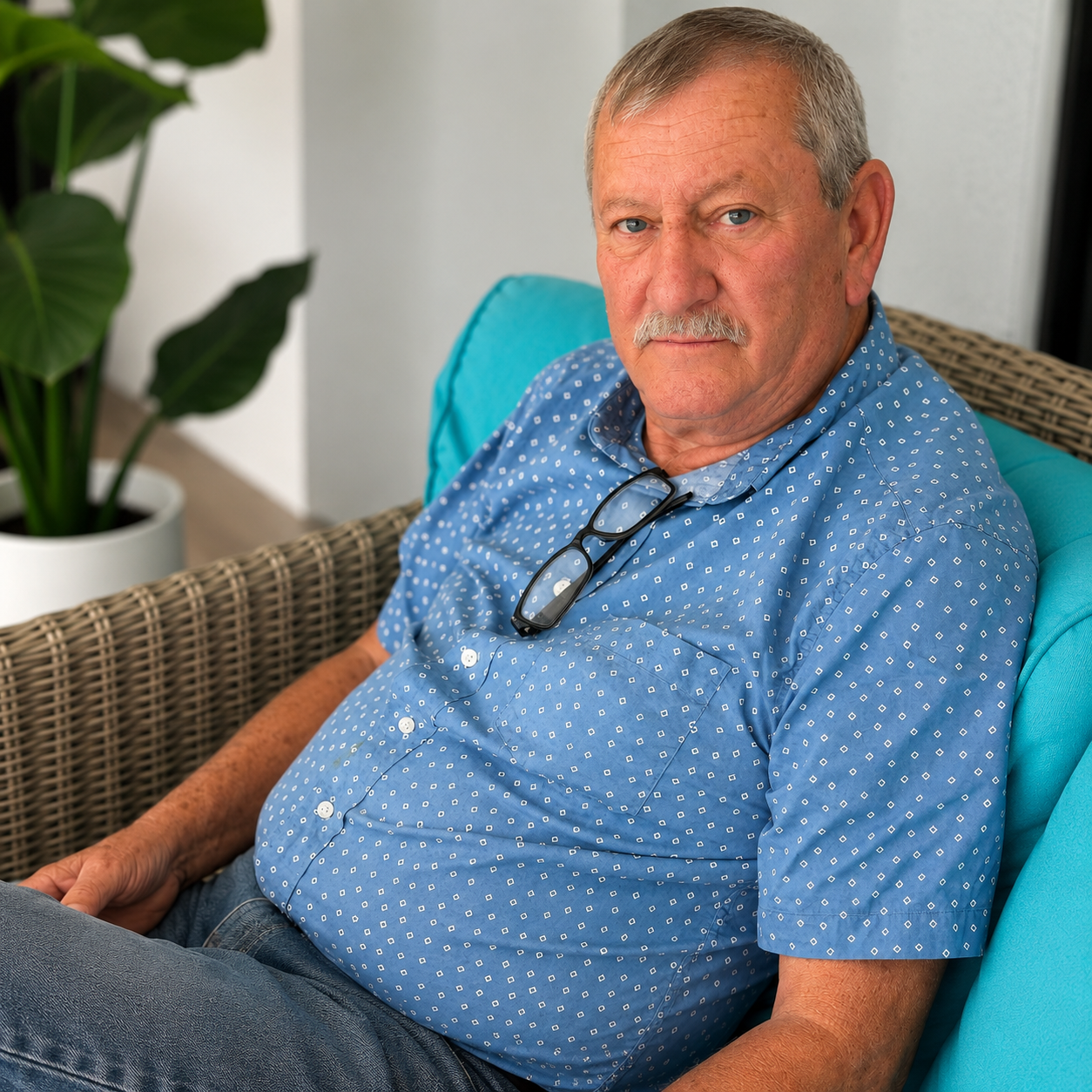
Ask David Curington what he does, and he won’t lead with the résumé. He won’t tell you he’s built nine renewable natural gas plants, or that before those came twenty-six landfill power plants, or that the two facilities he just delivered, Arrowhead and Hopkins, came in right on schedule. He’ll tell you something simpler.


"I'm not an engineer, I'm just a carpenter."


It’s the kind of line that undersells two decades of work, and David knows it. But it’s also the truest thing about him. Construction is the family trade. His father was a general contractor, and his grandfather before that. By age twelve he was tagging along on his dad’s job sites, fetching nails and learning by watching. From there it was houses, warehouses, shopping centers, and sixty-six gas station convenience stores before landfill energy ever entered the picture.


A Phone Call In 2006


The turn came through a friend of the family business in Ocala, Florida, who knew a company that needed a building put up at a landfill, of all places. That company was G2 Energy, and the phone number David was told to call belonged to Benny Benson.

David designed the building, built the plant, and got to know Benny. Then the 2008 crash hit, and Benny made him an unusual offer: stick around the Ocala plant and learn how to operate it. David did. Twenty years later, he’s still working for Benny, first as a subcontractor and now as an employee, and he doesn’t hesitate to call him a dear friend. “If Benny wants me to go do a project somewhere, I’ll go do it for him.”

Thirty-five plants at landfills. Twenty-one years. Arrowhead and Hopkins were numbers eight and nine on the RNG side, with two more, GFL and Opal, already in motion. At this point, he says, he could build one without a drawing.


A Hundred Calls A Day


David’s day starts at 6:30 in the morning, and from there it rarely slows down. He’s usually running two or three projects at once: boots on the ground at one site, managing the others by phone, photos, and Teams calls. He averages more than a hundred calls a day, incoming and outgoing.

His philosophy on getting things done is pure job-site pragmatism: if the plumber says he’ll call you back in a few hours and doesn’t, you call another plumber. And another. “I push things and I stay on top of things,” he says. “I may call you four times in one day and you may get aggravated, but I’m sorry. I’ve got things I’ve got to get done.”

He’s quick to share the credit, though. When Arrowhead and Hopkins ran simultaneously, David anchored one site while superintendent Dutney Simon, fifty years in construction himself, held down the other, the two of them talking five or six times a day. Project managers Kevin and Ty ran support from afar. Ask David about the hierarchy and he waves it off: “It’s not like they’re over me or I’m over them. We’re a team.”


Home Every 6 Weeks


David is seventy-two. He and his wife recently settled in Wildwood, Florida, with a new garage going in, the swimming pool done, and the last house they plan to finish. For years she traveled the country with him from job to job; these days she prefers home, so David works the field and comes back for a week about every six weeks.

He has a plan: three more years, then retirement. Mostly. “If they wanted me to be involved in meetings and give them my two cents from home? Absolutely. I love to be involved.” And there’s always the standing exception for Benny.

So what keeps a man on job sites at seventy-two, six weeks at a stretch, a hundred phone calls a day?

“Because I enjoy it,” he says. “We have a good team of subcontractors. We all work together, we all get along. They’ll do anything I ask them to do.” Then he laughs. “I can’t go fishing every day.”


The Whole Package


David may play down his own role, but he’s clear-eyed about where ESI stands. He’s worked for a half-dozen engineering firms over the years, and he says most of them only have pieces of the puzzle, subbing out the rest. ESI has the whole package: process engineers, mechanical engineers, controls, programming, and piping, all in-house. In an industry with maybe thirty companies building landfill RNG plants nationwide, he counts ESI among the very best.

Then he brings it back down to earth, the way he always does. The engineering is the hard part, he insists. The building? “You can get an old carpenter like me to build it.”


Nine plants, soon to be eleven, say otherwise.


Is Your Facility Leaving Money on the Table? The Case for Expert O&M

Is Your Facility Leaving Money on the Table? The Case for Expert O&M

130 new RNG facilities came online in 2025. Hundreds more are aging. The gap between facilities that perform and those that underperform has never...

Read More
ESI to Provide EPC, O&M Solutions for Two LFG to RNG Facilities in North Carolina

ESI to Provide EPC, O&M Solutions for Two LFG to RNG Facilities in North Carolina

FACILITIES TO SUPPORT BP'S TRANSITION TO NET ZERO Energyneering Solutions (ESI) is pleased to announce the engineering design and construction of two...
Read More
Four Peaks Energy Facility successfully completed its commissioning process and is now operational

Four Peaks Energy Facility successfully completed its commissioning process and is now operational

ESI provided engineering services for the expansion of the gas collection and control system for the Four Peaks LFGTE Facility at Camino Real...

Read More