

Built on People: Noah Pearcy and ESI's Commitment to O&M Excellence
Discover how Noah Pearcy's journey at ESI exemplifies the company's commitment to operational excellence through people, problem-solving, and ongoing...
4 min read
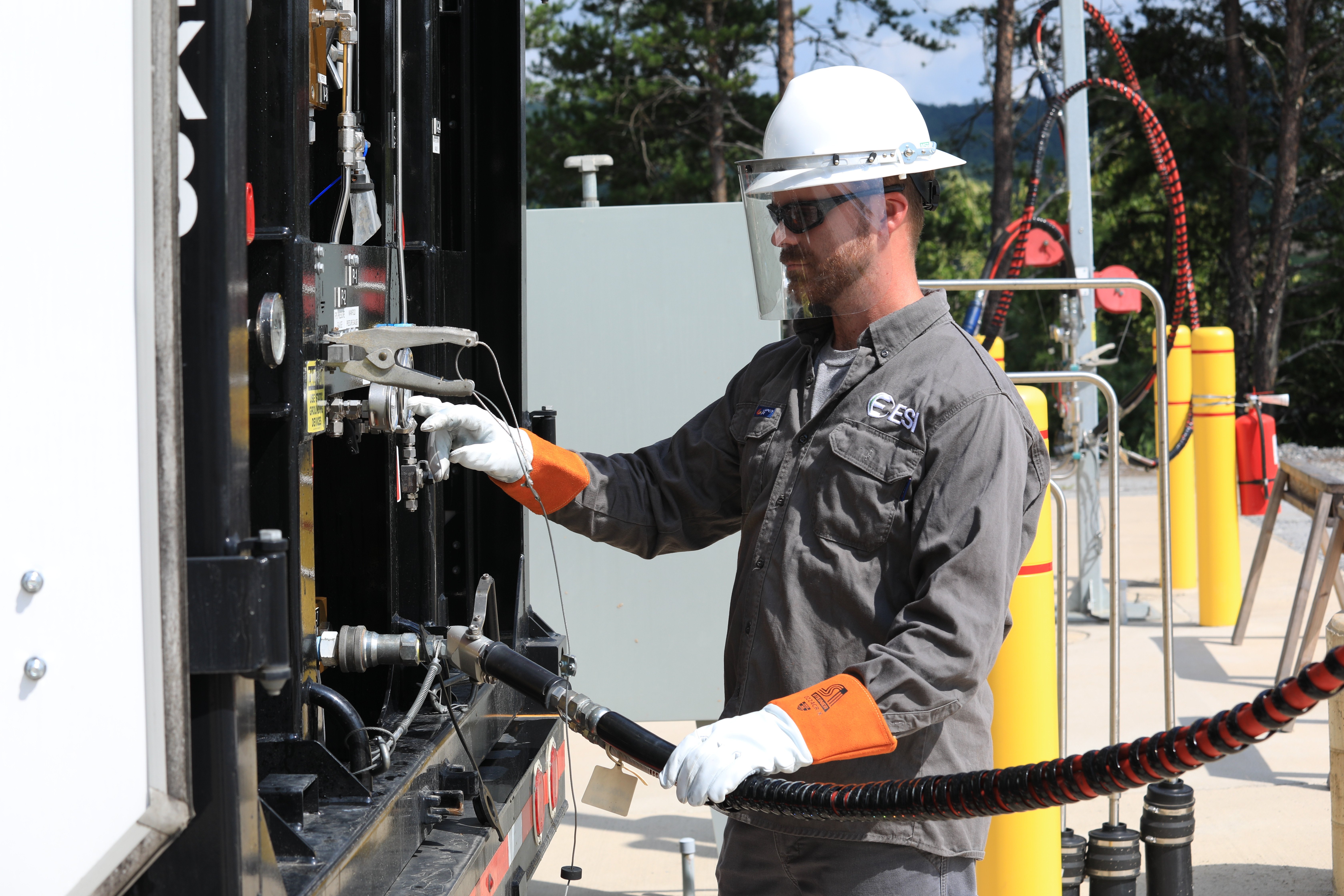
Two southeastern U.S. renewable natural gas facilities show how ESI adapts its O&M approach to different operating models while maintaining the same focus on reliability, responsiveness, and long-term asset performance.
Building a renewable natural gas facility creates an asset. Keeping it running is what creates the value. That difference, between building a facility and standing behind it for its entire operating life, is where ESI's O&M work lives.
ESI designed and built two renewable natural gas facilities in southeastern U.S., then carried that knowledge through commissioning and into long-term operations and maintenance. Today, the two facilities provide a clear example of what comprehensive RNG O&M looks like across very different operating models.
Noah Pearcy, ESI's Technical Services Manager for O&M, puts it plainly: a facility only creates value when it is actually running. That is why ESI's approach extends well beyond responding to work orders. The team takes responsibility for keeping the complete operation moving, from gas collection and equipment reliability to gas quality, compliance, pipeline coordination, and owner support.
The first facility is the more straightforward of the two operations. Located within a few miles of the natural gas pipeline, the facility sends finished RNG directly into the pipeline.
Noah describes it as "steady as a rock."
That consistency may look simple from the outside, but it is the result of experienced operators maintaining equipment, monitoring the process, managing gas quality, optimizing performance, and addressing developing issues before they become downtime.
The second facility is a different story.
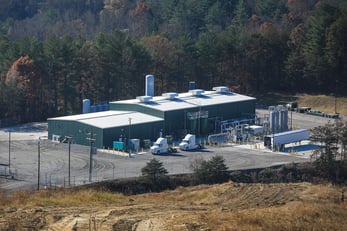
The nearest pipeline is approximately 18 miles away, making a direct connection more difficult. Instead, the facility operates as a virtual pipeline. RNG is produced at the facility, compressed into high-pressure trailers, transported roughly 30 miles to a separate decant facility, and then injected into the pipeline.
ESI operates the plant and the decant site as one coordinated system.
Approximately three trailer loads move through the operation each day, and keeping them moving means coordinating production, trailer availability, transportation, weather, traffic, and the decant site all at once. When a trailer isn't where it needs to be, gas that could have gone to the pipeline gets flared instead. Every load that moves on time is revenue protected.
For Noah, that is one of the most important lessons. O&M is not just about the equipment inside the fence. At a complex RNG asset, operations can depend on multiple interconnected systems, partners, and logistics all working together.
.jpg?width=309&height=232&name=Upper%20Piedmont%20(2).jpg)
Good operations and maintenance is often about preventing problems before they happen. But even the best-run facility can experience an unexpected failure.
At the second facility, that moment came when a piece of equipment broke.
Noah didn't wait on freight. He loaded the piece of equipment onto a trailer and drove it to the manufacturer in Ohio himself, then leaned on relationships built over his career to accelerate the rebuild and get the equipment back in service in a timely manner.
It is an unusual story, but it illustrates a much broader part of ESI's O&M philosophy: take ownership of the outcome.
Based on Noah's operating experience, every day an RNG facility is operating cleanly, it can mean $200,000 to $300,000 in revenue, depending on the facility and market conditions.
For an asset owner, that means effective RNG operations and maintenance is not simply a maintenance expense. Reliability, uptime, and fast problem resolution are directly connected to the value the facility can produce.
No ESI facility runs on the knowledge of its onsite team alone.
ESI's O&M organization includes more than 70 operators, backed by operations leadership with extensive experience across different operational backgrounds. If a facility encounters an unusual problem or needs additional manpower, the onsite team can draw on resources throughout the larger organization.
That support also extends to ESI's relationships with equipment manufacturers and vendors.
In August 2026, ESI operators gathered in Nashville for annual technical training that brought equipment manufacturers directly together with the people operating and maintaining RNG assets in the field. In addition to technical instruction, operators had extended opportunities to ask manufacturers the real-world troubleshooting questions they had developed while working with the equipment.
For Noah, that investment is essential. ESI is a services and solutions company, and much of the value it provides comes from the people operating customer assets every day. Developing those people strengthens the service behind every facility.
The results reflect that focus. Across the portfolio, ESI management estimates uptime at approximately 97 percent, and individual facilities sometimes run an entire month without a single interruption.
These two southeastern facilities require different kinds of expertise.
At the first facility, success often looks uneventful: preventive maintenance is completed, the process remains stable, gas meets specification, and the facility simply keeps operating.
At the second facility, success requires managing a more complex virtual pipeline and being prepared to respond quickly when logistics or equipment do not go according to plan.
ESI brings the same objective to both.
Keep the facility safe. Keep it efficient. Protect uptime. Keep pipeline-quality RNG moving.
This is what comprehensive O&M looks like when the provider takes responsibility for the performance of the entire asset, not simply the equipment on a maintenance schedule.
Building an RNG facility creates the asset. Keeping it running creates the value.
What does ESI's renewable natural gas operations and maintenance service include?
ESI's O&M responsibilities can extend from landfill gas collection through delivery of pipeline-quality RNG, including equipment maintenance and optimization, gas quality, compliance, pipeline coordination, and owner communication.
Why is uptime important for an RNG facility?
An RNG facility creates value while it is operating and producing usable gas. Based on ESI operating experience, uptime may represent approximately $200,000 to $300,000 per day in revenue, depending on the facility and market conditions.
What is a virtual pipeline for renewable natural gas?
A virtual pipeline transports finished RNG by high-pressure trailer instead of relying on a direct physical pipeline connection. At the second facility, RNG is loaded into trailers, transported to a separate decant facility, and then injected into the natural gas pipeline.
How does ESI support preventive maintenance at RNG facilities?
ESI operators continually maintain and monitor equipment, manage process conditions and gas quality, and address issues before they become unplanned downtime. The exact O&M strategy is adapted to the operating requirements of each facility.
What happens when an RNG facility has an unusual equipment problem?
ESI-operated facilities can draw on the broader O&M organization, including more than 70 operators, experienced leadership, established procedures, vendor relationships, and technical resources beyond the people physically onsite.
How does ESI train its RNG operators?
ESI invests in ongoing technical development. In August 2026, operators participated in technical training in Nashville that included direct instruction and extended troubleshooting sessions with equipment manufacturers.
What uptime does ESI achieve across its O&M portfolio?
ESI management estimates overall portfolio uptime at approximately 97 percent, although performance varies by facility and operating conditions.
Discover how Noah Pearcy's journey at ESI exemplifies the company's commitment to operational excellence through people, problem-solving, and ongoing...
.jpg)
ESI's efforts in reducing landfill gas emissions through biogas projects and renewable natural gas facilities, contributing to a sustainable future.
.jpg)
ESI to supply operations & maintenance services to Nodal Energy; Facility powering 3.5 million homes by turning methane into renewable electricity...